Zacchaeus climbs a tree because the crowd blocks his view, but he discovers that Jesus has already seen him. The man treated as an outsider is called by name, welcomed into relationship, and invited into a life that makes wrongs right.
This reflection follows the movement from curiosity to welcome, from public judgment to personal transformation, and from hidden longing to visible restitution. It reminds us that no crowd can prevent Jesus from seeing the person he has come to seek.
“Zacchaeus, hurry and come down, for today I must stay at your house.”
Luke 19:5, World English Bible
The Gospel Reading
Luke 19:1–10. World English Bible, public domain.
1 He entered and was passing through Jericho.
2 There was a man named Zacchaeus. He was a chief tax collector, and he was rich.
3 He was trying to see who Jesus was, and couldn’t because of the crowd, because he was short.
4 He ran on ahead and climbed up into a sycamore tree to see him, for he was going to pass that way.
5 When Jesus came to the place, he looked up and saw him, and said to him, “Zacchaeus, hurry and come down, for today I must stay at your house.”
6 He hurried, came down, and received him joyfully.
7 When they saw it, they all murmured, saying, “He has gone in to lodge with a man who is a sinner.”
8 Zacchaeus stood and said to the Lord, “Behold, Lord, half of my goods I give to the poor. If I have wrongfully exacted anything of anyone, I restore four times as much.”
9 Jesus said to him, “Today, salvation has come to this house, because he also is a son of Abraham.
10 For the Son of Man came to seek and to save that which was lost.”
A Quiet Guide to This Passage
- Bring your honest curiosity to Jesus even if you are uncertain what faith will require.
- Hear the personal welcome of Christ before the crowd’s verdict about your past.
- Let grace produce specific repair wherever your choices have harmed another person.
- Remember that Jesus seeks people whom respectable crowds may prefer to overlook.
Devotional Reflection
Jericho is crowded because Jesus is passing through, and Zacchaeus wants to see him. Luke tells us that Zacchaeus is a chief tax collector and rich. His position likely connects him with a system that profited from Roman occupation and made him deeply unpopular among his neighbors.
His wealth gives him influence, but it cannot give him a clear view. Because he is short and the crowd will not make room, he runs ahead and climbs a tree. The image carries something almost childlike. A powerful man accepts public awkwardness because his desire to see Jesus has become stronger than his concern for appearances.
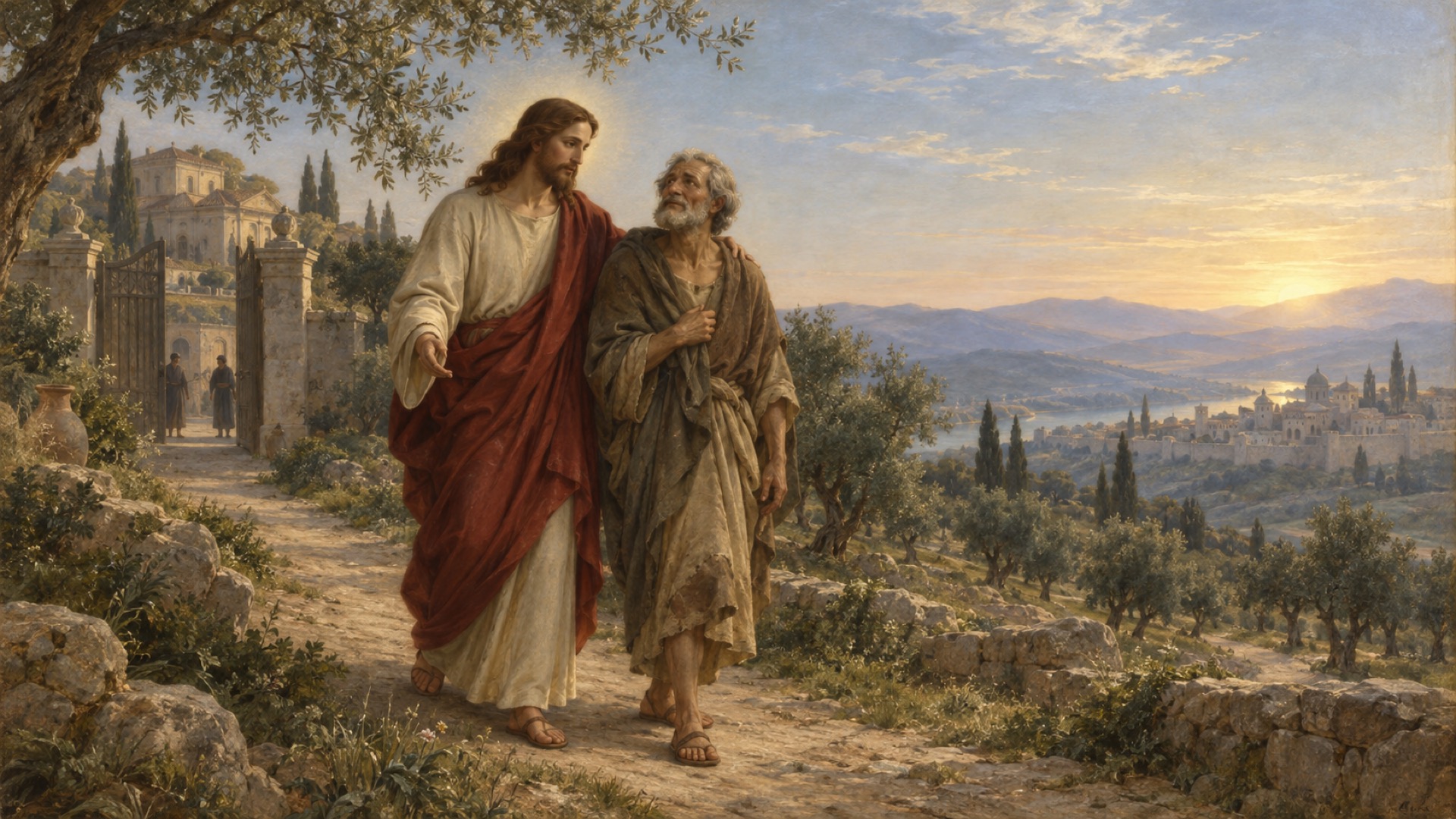
When Jesus reaches the tree, he stops and looks up. Zacchaeus has been trying to see Jesus, yet the decisive moment is that Jesus sees him. Christ calls him by name before Zacchaeus has offered a confession, apology, or promise. Grace begins with the initiative of Jesus.
Jesus says that he must stay at Zacchaeus’s house. The word ‘must’ gives the meeting a sense of divine purpose. This is not a chance encounter or reluctant courtesy. Jesus deliberately offers fellowship to a man whose neighbors have placed outside the boundaries of respectability.
Zacchaeus comes down quickly and receives Jesus with joy. The crowd responds by murmuring. They see only the category of sinner and interpret welcome as compromise. Jesus is not denying the harm Zacchaeus has done. He is entering the place where repentance and restoration can become possible.
The presence of grace does not leave injustice untouched. Zacchaeus promises to give half of his goods to the poor and to repay fourfold anyone he has wrongfully charged. His response is specific, costly, and connected to the way his former life affected other people.
Repentance is more than feeling regret about the past. It turns toward repair wherever repair can be made. Zacchaeus cannot erase what happened, but he can tell the truth about his wealth and use it to restore what was taken. Grace reaches his home, his relationships, and his financial choices.
Jesus declares that salvation has come to this house and restores Zacchaeus to the family name the crowd had denied him. He too is a son of Abraham. Christ does not allow the community’s contempt to have the final word about his identity.
The closing sentence explains the whole encounter. The Son of Man came to seek and to save that which was lost. Jesus is not merely available to people who can reach him through the crowd. He actively seeks the person who has become hidden behind shame, reputation, success, or exclusion.
You may feel overlooked because others see only one part of your story. You may also recognize choices that require honest change. The Gospel holds both truths together. Jesus sees you with personal attention, and his welcome is strong enough to lead you into repentance that becomes visible in the way you live.
Lord Jesus, thank you for seeing us when crowds, labels, and our own shame make us feel hidden. Call us out of every place where we observe you from a distance. Give us joy in receiving your welcome and courage to repair what our choices have harmed. Let your salvation reach our homes, habits, relationships, and resources. Amen.
New Day Focus shares peaceful Gospel readings, thoughtful Christian devotionals, and prayer for the day ahead.