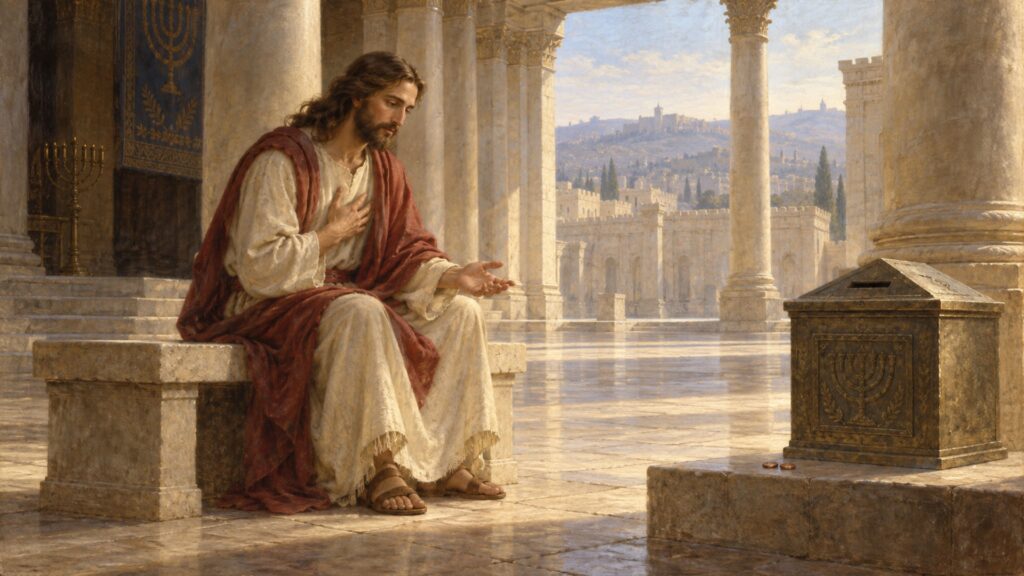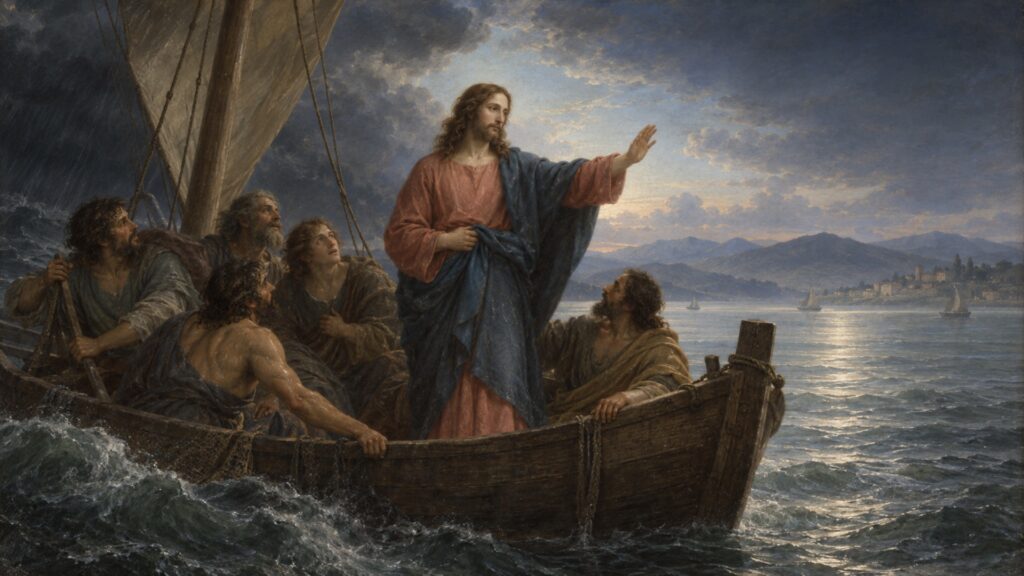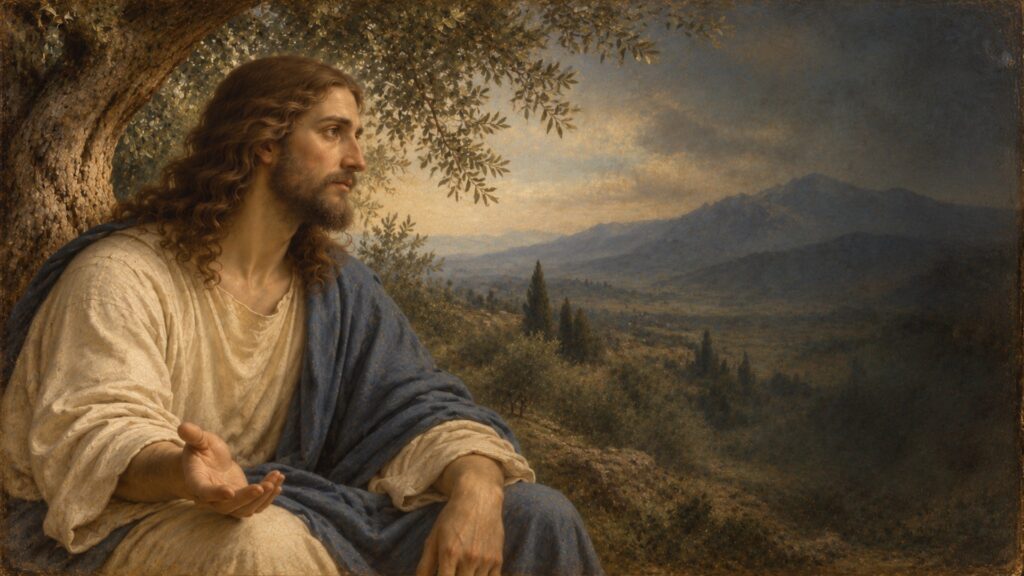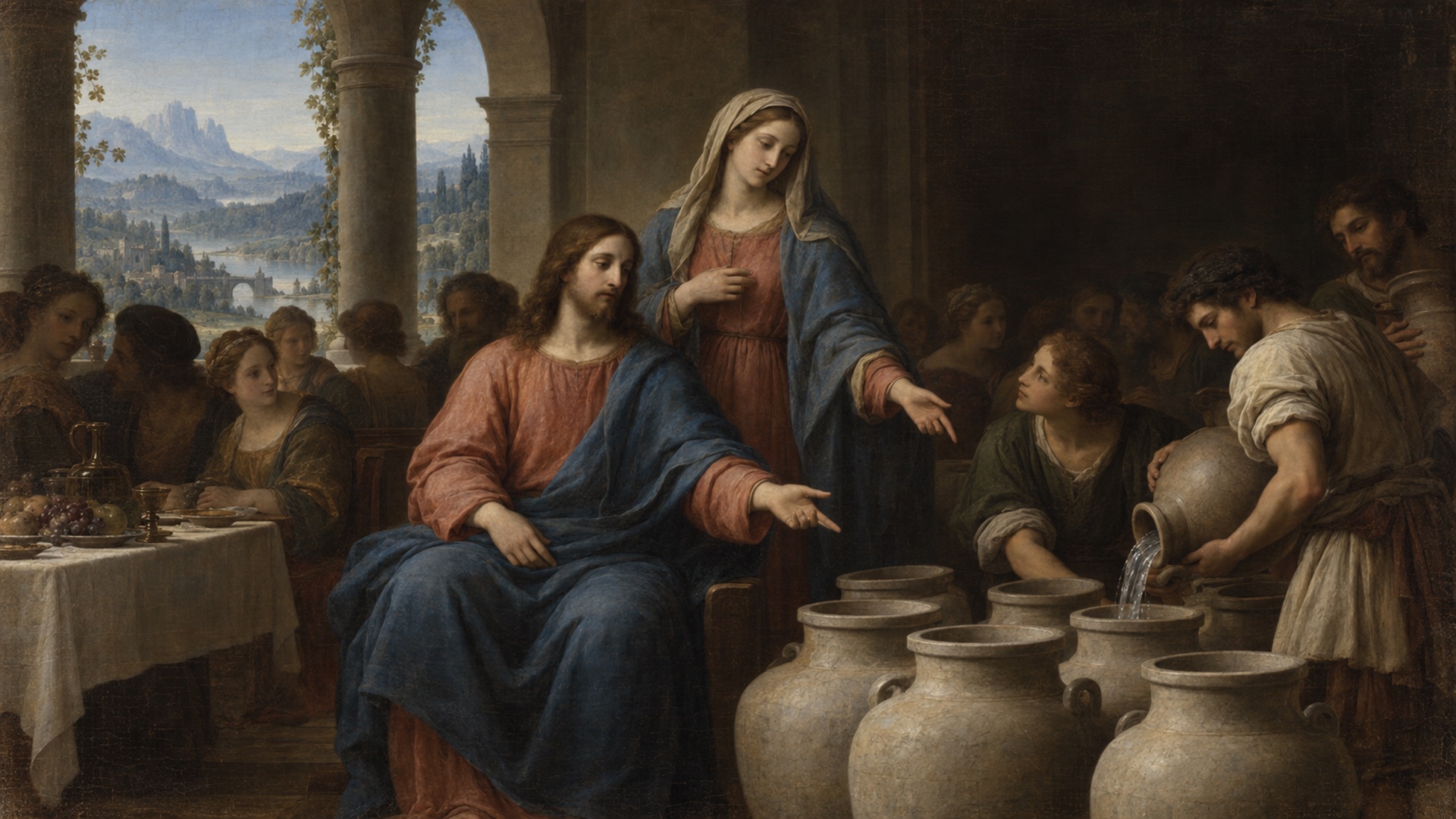
When something important has run out, Jesus is not absent from the need. At Cana, he meets a family’s hidden crisis with quiet compassion and turns ordinary water into an astonishing sign of grace.
This New Day Focus devotional enters John 2:1–11 through Mary’s attentive trust, the servants’ hidden obedience, the six stone jars, and the generous sign through which Jesus reveals his glory. The video above offers a peaceful reflection, while the reading and extended devotional below can be followed at your own pace.
“Whatever he says to you, do it.”
John 2:5, World English Bible
The Gospel Reading
John 2:1–11. World English Bible, public domain.
1 The third day, there was a wedding in Cana of Galilee. Jesus’ mother was there.
2 Jesus also was invited, with his disciples, to the wedding.
3 When the wine ran out, Jesus’ mother said to him, “They have no wine.”
4 Jesus said to her, “Woman, what does that have to do with you and me? My hour has not yet come.”
5 His mother said to the servants, “Whatever he says to you, do it.”
6 Now there were six water pots of stone set there after the Jews’ way of purifying, containing two or three metretes apiece.
7 Jesus said to them, “Fill the water pots with water.” So they filled them up to the brim.
8 He said to them, “Now draw some out, and take it to the ruler of the feast.” So they took it.
9 When the ruler of the feast tasted the water now become wine, and didn’t know where it came from, but the servants who had drawn the water knew, the ruler of the feast called the bridegroom,
10 and said to him, “Everyone serves the good wine first, and when the guests have drunk freely, then that which is worse. You have kept the good wine until now!”
11 This beginning of his signs Jesus did in Cana of Galilee, and revealed his glory; and his disciples believed in him.
A Quiet Guide to This Passage
- Bring Jesus the truth of what has run out without hiding or exaggerating it.
- Let Mary’s words guide your response: listen for Christ’s direction and take the next faithful step.
- Remember that hidden obedience is seen by God, even when no one at the table knows what it required.
- Look beyond the miracle to the sign itself, which reveals the character and glory of Jesus.
Extended Devotional Reflection
This extended written reflection follows the same Gospel passage and themes as the video, with additional space for prayerful reading.
Welcome to New Day Focus. Today we enter a wedding at Cana in Galilee, where the tables are crowded, conversation fills the courtyard, and a young household is beginning its life together. Jesus is there with his disciples, and his mother is there too. Before anyone understands what is about to happen, Mary notices a quiet crisis forming behind the celebration. The wine has run out. What follows is the first sign recorded in the Gospel of John, yet it arrives without spectacle. Jesus reveals his glory through the concern of his mother, the obedience of servants, ordinary water, and a gift so generous that the master of the feast can only wonder why the best has been saved until now.
Our reading is John chapter 2, verses 1 through 11, from the World English Bible, a public domain translation.
The third day, there was a wedding in Cana of Galilee. Jesus’ mother was there. Jesus also was invited, with his disciples, to the wedding. When the wine ran out, Jesus’ mother said to him, “They have no wine.”
Jesus said to her, “Woman, what does that have to do with you and me? My hour has not yet come.”
His mother said to the servants, “Whatever he says to you, do it.”
Now there were six water pots of stone set there after the Jews’ way of purifying, containing two or three metretes apiece. Jesus said to them, “Fill the water pots with water.” So they filled them up to the brim. He said to them, “Now draw some out, and take it to the ruler of the feast.” So they took it. When the ruler of the feast tasted the water now become wine, and didn’t know where it came from, but the servants who had drawn the water knew, the ruler of the feast called the bridegroom and said to him, “Everyone serves the good wine first, and when the guests have drunk freely, then that which is worse. You have kept the good wine until now!”
This beginning of his signs Jesus did in Cana of Galilee, and revealed his glory; and his disciples believed in him.
John begins this scene with a simple phrase, “The third day.” The words carry us forward from the calling of the first disciples and into the first public sign of Jesus. The setting is not a palace, a battlefield, or a religious gathering arranged for important people. It is a village wedding. Families have come together. Food has been prepared. Guests have taken their places. The newly married couple is surrounded by the hopes of everyone who loves them. The Gospel invites us to meet Jesus in the middle of ordinary human joy, because the glory of God is not confined to places that appear solemn. Christ enters homes, meals, friendships, and celebrations, and his presence gives ordinary life a depth we might otherwise miss.
There is something tender in the opening detail that Jesus’ mother was there. John does not introduce her as a distant observer. She belongs within the life of this community and seems close enough to the family to recognize what is happening before the guests do. Jesus and his disciples have also been invited. The Son of God does not stand outside the gathering as if human happiness were beneath him. He accepts hospitality and shares the table. His first sign will protect a celebration from shame and allow a young couple’s wedding feast to continue. This tells us something beautiful about his heart. The One who came to save the world is attentive to a problem that others might dismiss as small.
The wine runs out quietly. Perhaps a servant discovers an empty vessel and checks another one, hoping the supply has merely been moved. Perhaps worried whispers pass between those responsible for the feast. The music may continue and the guests may keep talking, but behind the visible celebration there is growing anxiety. In that culture, hospitality carried deep significance, and such a failure could bring lasting embarrassment to the bridegroom and his family. No one at the table needs to know yet, but the people serving already understand. This is often how trouble enters our own lives. Outwardly, everything may appear settled while an unseen shortage is developing, and the distance between appearance and reality becomes difficult to carry.
Mary notices. The passage does not tell us who informed her or how much she saw, but it shows us what she does with the knowledge. She turns to Jesus and says, “They have no wine.” Her words are brief because she does not need to dramatize the need. She neither instructs him how to act nor announces the crisis to the room. She simply places the truth before him. This is one of the most natural pictures of prayer in the Gospels. We can bring Christ what is real without composing a perfect speech. We can name the emptiness, the fear, the confusion, or the need, trusting that he sees more clearly than we do and loves more deeply than we can measure.
Mary’s concern is directed toward someone else’s difficulty. The shortage is not her humiliation, yet she does not ignore it because it belongs to another household. Her attention is a form of mercy. Many acts of compassion begin in this quiet way, when one person notices what everyone else has overlooked. A strained expression, an unfinished sentence, a sudden silence, or a task that has become too heavy can reveal that someone near us is running out of strength. The life of faith includes learning to notice. We do not need to pry into every private burden, but we can become less absorbed in ourselves and more available to the needs God places within our reach.
Jesus answers, “Woman, what does that have to do with you and me? My hour has not yet come.” To modern ears, the word “woman” can sound cold, but in the Gospel it is not an insult. Jesus will use the same form of address from the cross when he entrusts his mother to the beloved disciple. Even so, his reply introduces a solemn distance. Mary sees the immediate shortage, while Jesus sees the divine hour toward which his whole mission is moving. In John’s Gospel, that hour is bound to his death, resurrection, and glorification. The gift at Cana cannot be separated from the greater gift he will make of himself.
This moment between Jesus and Mary is gentle but profound. She has known him through the hidden years of home and family, yet his public ministry now unfolds according to the will of the Father. Love does not mean possession, and closeness does not mean control. Mary brings the need to him, then leaves the manner and timing of his response in his hands. Her faith does not collapse when his answer is difficult to understand. She does not argue, demand a sign, or explain herself. Instead, she turns to the servants with calm confidence and says, “Whatever he says to you, do it.” Those words reveal that her trust rests in Jesus himself rather than in the outcome she can predict.
Mary’s instruction deserves to remain with us. “Whatever he says to you, do it” is not a promise that Christ will follow our preferred plan. It is an invitation to place our lives under his word. Genuine trust is willing to listen before it knows what obedience will require. The servants have no idea what Jesus is about to do. Mary does not offer them an explanation, and she does not claim to know every detail. She points them toward her Son. In the center of a complicated situation, she gives them the clearest possible direction. Stay near him, attend to his voice, and respond when he speaks.
The relationship between Jesus and Mary gives this passage much of its quiet emotional power. Mary sees the need and carries it to him. Jesus receives the concern within the larger purpose of his hour. Mary then withdraws from the center of action by directing the servants to Jesus, yet she remains central to the scene because her faith opens a path of readiness around him. She does not draw attention to herself. Her influence is seen in the obedience that follows. This is a beautiful pattern for every person who hopes to lead others toward Christ. We do not make ourselves the answer. We help create the conditions in which his word can be heard and trusted.
Nearby stand six stone water pots used for purification. They are large, heavy, and familiar. To the servants, they are probably part of the ordinary equipment of the feast. John gives us their purpose and size because the sign will speak through them. These are not decorative pitchers that can be lifted with one hand. Together they can hold an astonishing quantity of water. Jesus chooses vessels associated with cleansing and commands that they be filled. The objects at the edge of the gathering become part of the revelation. What seemed merely practical is taken into the work of divine abundance.
Jesus says, “Fill the water pots with water.” The instruction may have sounded unrelated to the actual crisis. Water was available, but wine was needed. The servants might reasonably have wondered why their effort should be spent on these enormous jars when the feast required something else. Yet they obey. They carry water again and again until John tells us that the pots are filled to the brim. Their obedience is physical, time consuming, and hidden from most of the guests. Faith often takes this form. We receive enough light for the next act of faithfulness, while the full purpose remains beyond our sight.
The phrase “to the brim” quietly honors the servants. They do not fill the jars halfway and wait to see whether the instruction proves worthwhile. They complete the task. There is no room left for more water, which means there will soon be no room left for doubt about the scale of Christ’s provision. Their careful obedience does not cause the miracle, because the power belongs entirely to Jesus, but it places them close to what he is doing. They will become the people in the story who know where the wine came from. Those who obey Christ in unseen places often gain a knowledge of his faithfulness that cannot be learned from a distance.
Then Jesus says, “Now draw some out, and take it to the ruler of the feast.” This command asks for another level of trust. Carrying water is one thing. Presenting what has been drawn to the person responsible for the banquet is another. If nothing has changed, the servants could face ridicule or anger. The text does not describe discussion among them. It simply says, “So they took it.” Their obedience moves from preparation to risk. They place the result in front of someone who has the authority to judge it, trusting the word of Jesus more than the evidence they possessed when the task began.
John does not tell us the exact instant when the water becomes wine. The mystery remains hidden within the servants’ obedience and Christ’s authority. There is no dramatic gesture and no public announcement. Jesus does not gather the guests to watch. The ruler of the feast tastes the wine without knowing where it came from, while the servants know. The sign is both magnificent and discreet. A vast gift has entered the celebration, yet only a few people understand its source. God’s work in our lives can also be quiet enough that others enjoy its fruit without ever seeing the prayers, decisions, and acts of trust through which we came to recognize his care.
The ruler of the feast calls the bridegroom and praises him. “Everyone serves the good wine first, and when the guests have drunk freely, then that which is worse. You have kept the good wine until now!” The bridegroom receives credit for a provision he did not create and perhaps did not yet understand. Jesus protects him from shame without asking for recognition. The miracle restores the feast in a way that preserves the dignity of the household. Christ’s generosity is never careless about people. He does not use their vulnerability as a stage for himself. His hidden kindness allows joy to continue and turns a threatened failure into a memory of unexpected abundance.
The quality of the wine matters. Jesus does not provide a barely acceptable substitute. The master of the feast calls it the good wine and marvels that it has been kept until now. Divine generosity is revealed not only in the amount but also in the goodness of the gift. The jars are full, and what is served is excellent. This does not mean that faith guarantees luxury or that every shortage will be answered in the way we desire. It means that the heart of Christ is not grudging. When he gives himself, he gives fully. His grace is not the poor remainder offered after better things have been exhausted. In him, God’s promised fullness has arrived.
John calls this miracle the beginning of Jesus’ signs. A sign is more than a display of power. It points beyond itself to the identity and mission of the one who performs it. The wine matters, the couple’s dignity matters, and the servants’ labor matters, but the Gospel asks us to look through the gift toward Jesus. He is the true center of the scene. The sign reveals his glory, not as a harsh blaze that drives people away, but as creative, compassionate abundance within a human celebration. The glory that made the world has come near enough to sit at a wedding table and care about a family’s need.
The sign also looks ahead. Jesus has spoken of his hour, and John’s readers know that the hour will come at the cross. Cana begins with a wedding and moves toward wine freely given. Near the end of the Gospel, Jesus will give himself in love and declare his work finished. The first sign is joyful, but it carries the shape of the whole mission. Christ brings the abundance of the coming kingdom through his own self giving. The best has been kept until now because God’s decisive gift is not an object, an experience, or a temporary rescue. The decisive gift is the Son who has entered the world.
The stone jars add another layer to the sign. They are connected with purification, with the proper washing that marked religious life. Jesus does not treat the longing for cleansing with contempt. He fills the vessels and transforms what they hold into the wine of celebration. John is showing us that something new is arriving in Jesus, not as a rejection of God’s former faithfulness, but as its fulfillment. What the rituals pointed toward is becoming present in him. Cleansing and joy meet in the person of Christ, who alone can address the deeper condition of the human heart and welcome us into communion with God.
It is worth noticing who understands the sign. The ruler tastes the result but does not know its source. The guests receive the gift without realizing a crisis existed. The bridegroom is praised. The servants, however, know where the wine came from. The disciples see enough to believe in Jesus more deeply. The story gently overturns our assumptions about spiritual privilege. Those nearest to the secret are not necessarily the people with the highest place at the table. They are the people who listened, carried the water, and took the cup forward. Service brings them into intimate contact with the work of Christ.
This can encourage anyone whose faithfulness feels unnoticed. You may be caring for a family member, serving your church, keeping a promise, doing honest work, or praying for someone who never knows your name has been spoken before God. Much of what sustains a community happens away from applause. Cana reminds us that hidden obedience is visible to Christ. The servants are not named, yet the Gospel preserves their knowledge forever. They knew. They had felt the weight of the water, heard the command, and watched the ruler’s face as he tasted the wine. Their quiet labor became part of a revelation that has strengthened believers for centuries.
The disciples respond by believing in Jesus. They had already followed him, but faith is not a single moment after which understanding is complete. Their trust grows as they witness his glory. They will continue to misunderstand him, fear, fail, and learn, but Cana gives them a sign to remember. Discipleship develops through encounters in which the character of Christ becomes clearer. We also need such memories. When a new uncertainty arises, it helps to recall the places where his wisdom held us, his mercy met us, or his word proved trustworthy. Remembered grace becomes strength for present obedience.
Perhaps the most immediate invitation in this passage is to bring Jesus the truth of what has run out. Some shortages are visible, while others remain hidden behind responsible habits and reassuring words. Patience can run low. Hope can become thin. A marriage can lose tenderness. A caregiver can reach the edge of endurance. A person who appears successful can feel empty and ashamed. Mary’s words give us permission to pray plainly. “They have no wine.” We might say, “Lord, I do not have the wisdom this decision requires,” or, “The strength I depended on is gone.” Honest prayer is not faithlessness. It is an act of trust because it brings reality into the presence of Christ.
After naming the need, we must allow Jesus to remain Lord of the answer. Mary does not dictate the miracle. This can be difficult because anxiety wants control. We imagine the exact solution, the exact timing, and the exact sequence that would make us feel safe. Then we measure God’s care by whether he follows our design. Cana offers a more mature posture. We can speak openly, ask boldly, and still place the outcome in his hands. His answer may involve waiting, an unfamiliar instruction, or a form of provision we would never have considered. Trust is not confidence in our forecast. It is confidence in his character.
We should also listen for the water pots in our own lives. The next faithful step may appear ordinary and disconnected from the larger need. It might be a conversation that requires humility, a habit of prayer restored after neglect, an apology offered without excuses, a boundary established with kindness, or practical help accepted from another person. We sometimes wait for a dramatic answer while overlooking the simple instruction already before us. Jesus can work through ordinary acts of obedience. The servants could not create wine, but they could fill jars. We cannot accomplish what only grace can do, but we can respond faithfully to what Christ has made clear.
Filling the jars to the brim does not mean driving ourselves into exhaustion. The servants were responding to a specific command, not attempting to earn the miracle through frantic effort. Healthy obedience is different from anxious striving. It listens to Jesus and acts within the task he gives. Sometimes faithfulness means work, and sometimes it means rest, confession, patience, or receiving care. The important question is not whether our action looks impressive. The question is whether it answers his word. Christ is responsible for transformation. We are invited to bring him willing attention and an undivided response.
The passage also teaches us how to stand near another person’s need. Mary does not expose the family’s embarrassment. Jesus does not humiliate the bridegroom. The servants do not interrupt the feast with rumors. Grace moves with discretion. When someone trusts us with a shortage in their life, we should resist turning it into conversation for others. Compassion protects dignity. We can pray, offer practical support, and point toward Christ without making ourselves central. Some of the holiest help is almost invisible, known fully only to the person who receives it and the Lord who provided it.
Cana is a joyful scene, and that joy matters. Christian faith is sometimes presented as if seriousness requires suspicion of beauty, feasting, and human affection. Yet Jesus chooses a wedding for his first sign. He blesses a gathering shaped by covenant, family, hospitality, and hope. The Gospel does not deny sorrow, and Jesus’ hour will involve real suffering, but sorrow does not have the final word. The sign points toward the joy of God’s kingdom, where communion is restored and the feast does not fail. Every honest joy can become an occasion for gratitude when it is received in the presence of Christ.
At the same time, the wedding feast is vulnerable. Human plans cannot secure endless celebration. Supplies fail, bodies tire, relationships strain, and beautiful days pass. The sign does not ask us to pretend that earthly happiness is permanent. It reveals that Jesus is present within its fragility. When the created gift runs out, the Creator has not run out. This truth does not spare us every loss, but it changes where we place our final hope. We can enjoy today without demanding that today become eternal, because Christ is leading his people toward a joy that circumstances cannot exhaust.
Mary’s presence beside Jesus helps us see faithful love without confusion about its center. She is attentive, courageous, and trusting. Her words move the servants toward obedience, but the power belongs to Jesus. He is the one who commands, transforms, reveals glory, and awakens belief. Mary’s greatness in the scene is expressed through her confidence in him. She does not compete with his glory. She helps others face it. In our own relationships, the deepest love is not the desire to make another person dependent on us. It is the willingness to help them hear and follow Christ.
The best gift may not be the outcome we first imagined. The family at Cana needed wine, and Jesus provided it. Beneath that immediate need, however, the greater gift was the revelation of who had come among them. The disciples left with more than a memory of an extraordinary drink. They had seen his glory and believed in him. When we bring Christ a problem, we naturally want the problem solved. He cares about the actual burden, yet his deepest purpose is to draw us into communion with himself. An answered prayer is precious, but knowing the Lord is the treasure toward which every sign points.
Ask yourself quietly what shortage you are trying to hide. You do not need to expose it to everyone, but you can bring it to Jesus. Then consider whether someone near you is carrying a need that love is asking you to notice. Finally, listen for the faithful step already within reach. It may seem as ordinary as water and as unimpressive as a stone jar. Do not despise it. The Lord who revealed his glory at Cana remains able to work through simple obedience, and his wisdom reaches beyond what you can presently see.
Imagine the scene after the crisis has passed. Conversation continues. The newly married couple receives congratulations. The master of the feast remains impressed by the quality of the wine. Most guests never learn how close the celebration came to embarrassment. Near the jars, the servants exchange knowing looks. Mary remains close, her confidence vindicated without any need to claim credit. The disciples watch Jesus with new wonder. At the center is Christ, quiet and unhurried, already moving toward the hour when his glory will be revealed through a love greater than anyone at the feast can yet imagine.
This is the Jesus we meet today. He is not indifferent to the hidden strain within a joyful room. He receives the concern his mother brings, speaks a word worthy of obedience, protects the vulnerable, provides with generosity, and turns attention toward the glory of God. We cannot control his work, but we can trust his heart. We cannot manufacture transformation, but we can fill the jars he places before us. We may not understand the hour, but we can remain near him until faith sees more clearly.
Let us pray.
Lord Jesus, we welcome you into the ordinary rooms of our lives, into our celebrations and responsibilities, our relationships and hidden concerns. You see every need before it becomes visible to others, and you understand the places where our strength, patience, hope, or wisdom has run low. Teach us to bring you the truth without fear and to trust you without trying to control the form of your answer.
Give us the attentive compassion we see in Mary. Help us notice the quiet burdens carried by the people around us and respond without exposing or humiliating them. Make our prayers simple and sincere. When we do not understand your timing, keep our faith rooted in your character. May our influence always direct people toward your voice rather than toward ourselves.
Give us the willing obedience of the servants. Show us the next faithful step, especially when it appears ordinary or unrelated to the result we desire. Guard us from anxious striving, but free us from delay when your word is clear. Help us serve with care even when no one is watching, trusting that hidden faithfulness is known to you.
Thank you for the abundance of your grace. You do not shame us for what we lack, and you do not offer a grudging measure of mercy. You gave yourself for us, and in you the promises of God find their fulfillment. Open our eyes to the good gifts we have received, and make us generous toward those whose needs are within our reach.
Reveal your glory in us today, not for our recognition, but so that faith may deepen and love may become visible. Keep Jesus at the center of our homes, our work, our decisions, and our hope. When the future is uncertain, remind us that the best and final word belongs to you. We place what has run out into your hands, and we ask for grace to do whatever you say. Amen.
Thank you for spending this time with New Day Focus. Carry the peace of Christ into your day, and remember Mary’s clear words at Cana: “Whatever he says to you, do it.”
New Day Focus shares peaceful Gospel readings, thoughtful Christian devotionals, and prayer for the day ahead.